The Role of BIM in Smart Building Construction & Operation
Smart buildings refer to buildings that have been designed to optimise the consumption of energy and also improve the comfort of occupants, and help to ensure the management of resources through the use of advanced technologies. These smart buildings integrate the systems, for example, climate control, lighting control, security and environmental monitoring features to a centralised network that can also be managed in real time.
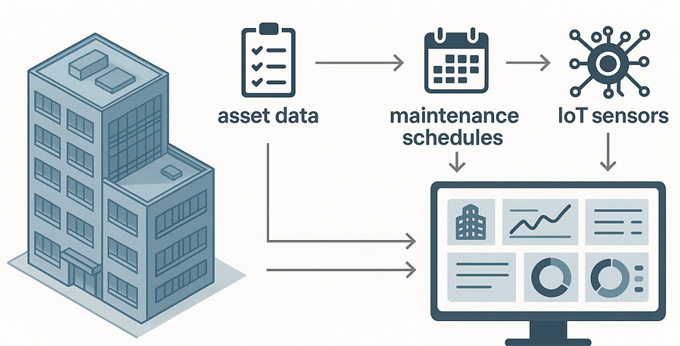
Smart building uses Internet of Things (IoT) sensors and data analytics to respond to the requirements of the users, thus improving the operational efficiency of the smart buildings. The smart buildings have been designed to be sustainable and help to meet the energy efficiency and living comfort zones.
What are the key components of smart buildings
IoT Devices
Several Internet of Things (IoT) devices have been used in smart building operations, which are as follows:
1. Temperature and humidity sensors
2. Smart meters
3. Motion and occupancy sensors
4. Security cameras and access systems
5. Environmental sensors
BIM Platforms
Several BIM platforms have been used in the smart building operations to create, store and manage the building data, which are:
1. BIM 360
2. Archicad
3. Autodesk Revit
4. Navisworks
Smart Controls
The smart control devices have been used in the smart building operations to adjust the building systems automatically on the basis of the sensor input. These smart controls are as follows:
1. Lighting control systems
2. Smart thermostats
3. Alarm and emergency systems
4. Automated blinds and ventilation
Building Management Systems (BMS)
Building management systems are the centralised platform, which can integrate with Building Information Modelling (BIM) for controlling and monitoring all connected systems.
Discuss the role of Building Information Modelling (BIM) in smart building operations
Optimizing designs
BIM technology allows the energy performance of the building structure to be calculated in advance. This helps to select more sustainable materials and plant solutions.
Integration of the new technologies
The BIM technology helps to facilitate the connection between the intelligent systems and thus helps to ensure that all modern technologies have been integrated and work harmoniously. BIM technology also helps to manage complex systems, for example, the ventilation system, energy consumption and people flows.
Operation management feature
The smart building managers are able to access up-to-date data on facilities, monitor consumption and plan maintenance work with the help of the BIM design model.
Energy efficiency feature
BIM features smart buildings that use sensors, which help to detect the time when the rooms are empty, thus it can reduce lighting and HVAC usage automatically. Thus, BIM technology can cut the overall energy consumption and its cost significantly.
Predictive maintenance feature
BIM technology also has the ability to track performance data from several equipment, like pumps or chillers. BIM also helps to send a warning to a device while it starts to perform poorly and begins to break down. Thus this way, BIM technology can prevent costly downtime.
Enhancing comfort and health
With the help of the BIM technology, the indoor climate system of the smart buildings can be adjusted automatically on the basis of the number of people, the quality of the air, or outside weather conditions, thus helping to make the indoor spaces of the smart buildings healthier and more pleasant.
Better facility management feature
With the help of the BIM technology, managers can also view building data and alerts through a Digital Twin dashboard, which helps to make their work easier and more efficient.
To get online demonstration, watch the following video tutorial.
Video Source: Building Transformations
Making informed decisions
The historical data of the smart buildings can be stored in the BIM technology, which helps the owners to decide when to upgrade systems, expand the spaces of the building structure and implement the sustainability features.
Providing a complete analysis of the smart buildings
The BIM design model helps to provide a complete analysis of the smart buildings, helps to replace the traditional logic that has been applied to design and also helps to adopt sustainable material installations on the smart buildings.
Reducing workload
BIM technology also helps to reduce the workload, as well as to keep track of scheduling tasks. In addition, BIM technology is also involved in collecting, consolidating and representing the data that has been created by the smart objects throughout the entire construction projects.
Providing scheduling helps
BIM technology also provides scheduling helps to arrange the tasks of the building objects while looking into the consumption of energy and the sustainable design model of the building. BIM technology allows managers to apply smart objects to the core system and fetch data of the building structure from the BIM design model, thus redesigning the building structure in a modern way.
Addressing workforce challenges
he OpenSite Designer software also allowed users to work with a user-friendly and innovative UX, which helps to simplify the onboarding process and helps to improve retention.
Gallery
Feel free to contact us for BIM requirements. One of our representative will respond you within 24 Hours. Send us your projects requirement today and grow your project.
Explore More !