Key Applications of BIM in Green Spaces
Green BIM is the method on the basis of the creation of a design model for energy analysis derived from a BIM model. The use of BIM technology in building projects helps to achieve building sustainability and also helps to improve the overall building performance objectives on a building construction project. Green BIM is the process to generate and manage the full-lifecycle data information of the building structure on the basis of the building information model, which helps to promote and achieve the expected sustainable goals.
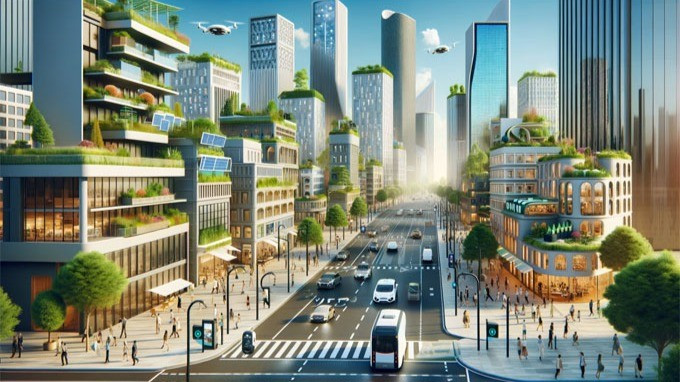
BIM technology helps to optimise the orientation and shape of the building structure, helps to maintain the relationship between walls and windows, maintains natural lighting, water management, plant choices, energy performances and the sustainability of the materials of the building structure.
Discuss the role of BIM for urban green spaces
Influences industry development
The building performance has been improved with the help of the BIM technology, which realises the sustainable development of buildings. The green building ia acts as an important goal of "carbon neutrality" in the construction industry, which helps in the design and optimisation process. Thus, BIM technology is an important factor for achieving sustainable and green development of the construction industry.
Compatible in the time dimension
BIM technology helps to carry out one-to-one correspondence to the planning, design and construction process. BIM technology also helps to analyse the process from planning and designtooperation and maintenance, to the final demolition, which helps to consider that the BIM technology and greenbuildings have a relatively close relationship in the time dimension.
Construction site analysis
3D visualisation feature of the BIM technology allows the analysis of the existing, often constrained, urban spaces, which helps to identify the opportunities for the green areas.
Involves landscape modelling
BIM technology also allows for the landscape elements integration along with the specific data on species, root protection areas, growth, and flowering periods.
Environmental simulation factor
With the help of the BIM technology, the building planners are able to analyse shadow impact, solar radiation, and wind flow, which helps to optimise the microclimate and ensure efficient irrigation.
Maintenance planning feature
BIM technology helps to support the long term management of green infrastructure, which allows the predictive maintenance of landscaping and irrigation systems.
Learn about the role of BIM in increasing collaboration among the urban stakeholders
1. Collaboration is one of the important factors to achieve successful urban planning, which can be enhanced by the BIM technology. In the urban planning process, various stakeholders, such as architects, planners, engineers, community members and government agencies, should work together, which helps to ensure the success of the urban building project. BIM technology helps to enhance communication among the stakeholders, which helps to reduce project delays and misunderstandings.
2. BIM technology also helps to streamline the collaboration by providing a centralised platform, in which all the project stakeholders can access the information and share that information. Each and every party can view the detailed 3D design models, data and plans in real time with the help of the BIM collaboration process. BIM technology is a shared platform which helps to eliminate the need for separate, disjointed communication channels, thus helping to ensure that all stakeholders are involved in the project that has been aligned with the same vision and objectives of the project.
3. BIM collaboration is also able to make changes and updates that are visible to all project stakeholders instantly. Better communication has been fostered among the urban planning stakeholders with the help of the BIM collaboration process. BIM technology helps to provide clear visualisations and simulations of the building project. The visual tools of the BIM technology help to make it easier for the stakeholders to understand the scope of the building project, thus helping to make more informed decisions and a smoother planning process.
To get online demonstration, watch the following video tutorial.
Video Source: iWorkstation
Discuss the future trend in urban planning and BIM
The future of BIM technology in making urban spaces is full of possibilities. The most significant trend of the BIM technology is to reduce the global carbon footprint. As cities grow over time, the demand for sustainable urban spaces has become more crucial.
BIM technology also helps building planners to create eco-friendly designs, which helps to reduce the environmental impact on the building structure.
Another trend of the BIM technology is the smart technology integration into the urban planning process. BIM technology has evolved to incorporate advanced tools which enable the real-time data analysis and simulation process. This indicates the better prediction of the building planners and responds to the requirements of the urban environments. Thus, the urban cities can be more adaptable and resilient.
Gallery
Feel free to contact us for BIM requirements. One of our representative will respond you within 24 Hours. Send us your projects requirement today and grow your project.
Explore More !