How to use BIM Interoperability Tools?
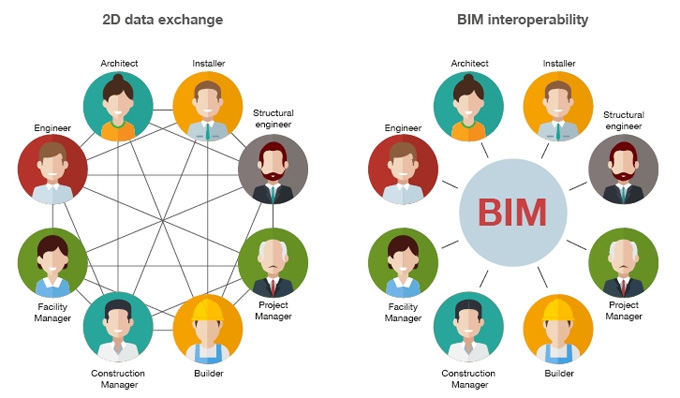
The interoperability tools of the Building Information Modelling (BIM) technology help to exchange and interpret data between the different architectural and engineering software programs accurately. The seamless information exchange process of the BIM interoperability tools is essential for the successful delivery of the design project, thus enabling the project team members to make better decisions, improve the project outcomes and reduce the project errors.
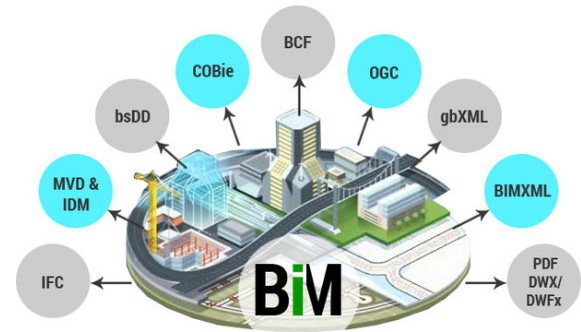
The BIM interoperability tools enable different software applications to exchange data without losing functionality. There are different tools that support the BIM interoperability process, which are as follows:
The BIM collaboration format tools
These tools enable users to create, share and track the issues in the project. On the basis of these issues, the users can propose solutions for those projects that are directly linked to the specific design objects in the BIM model.
IFC import/export tools
The IFC import/export tools allow design models created in one application that can be shared and viewed in another application. In this case, the quality of the IFC import and export can vary and prioritises the accurate and complete transfer of the data.
Model checkers and validator tools
The model checkers and validator tools help to ensure the quality and compliance of the BIM design models. These tools can also check the design models against a BIM execution plan or other predefined requirements, thus identifying clashes, errors or any kind of missing information in the design project.
BIM APIs
The BIM APIs allow developers and design professionals to create custom applications, which can interact directly with the BIM data and software.
Common data environments
The common data environments (CDEs) help to facilitate collaboration and the information exchange process among all project team members. The CDEs provide version control features, access permission features and can also maintain audit trails, thus maintaining data integrity and accountability.
Data transformation and mapping tools
The data transformation and mapping tools help to bridge the gap between the varying data structures, thus helping to maintain consistency and usability throughout the different systems.
Example of several BIM interoperability tools used in the design industry
Autodesk BIM 360
This BIM interoperability tool has been designed specifically for construction project management. Autodesk BIM 360 is a cloud-based system which enables the project team members to collaborate in real time, thus making this tool ideal for large and complex design projects.
Revit to IFC Workflows
The Revit to IFC Workflows focus on exporting the Revit files to the IFC format. This BIM interoperability tool allows the data to be accessible in multiple BIM applications.
BIMDeX
BIMDeX is another dedicated and exceptional solution which helps to streamline the data exchange throughout different CAD files and BIM applications. This BIM interoperability tool helps to offer the exporter and importer plugins for different design and BIM applications, which helps to make the model conversion process easy and fast with interoperability features.
Tekla Structures
Tekla Structures is another powerful BIM interoperability tool that has been used in structural engineering and construction projects. Tekla Structures helps to offer extensive interoperability features along with multiple file formats and platforms, thus enabling the project team members to provide more focus on the structural engineering projects.
Bentley Systems
Bentley Systems has been used in infrastructure projects, which helps to support interoperability between multiple file types and applications. Thus, this BIM interoperability tool helps to connect the data throughout the different stages of the design project.
Learn about the benefits of BIM interoperability tools in the architecture, engineering and construction industry
Extending design collaboration
The BIM interoperability tools enable the exchange of the design model with all the essential information, which helps to improve communication without any kind of hindrance. With the help of the BIM interoperability tools, the design professionals can access the design model and work simultaneously on the same page. Thus, the BIM interoperability tools help to avoid misconceptions in the design project and promote more collaboration in the design project.
Helps to achieve uninterrupted design workflow
The BIM interoperability tools help to achieve a smooth data conversion process, which helps to ensure the reduction of manual effort, as well as improve the overall design workflow of the project. The BIM interoperability tools also help to comply with automation processes and merge with several processes, for example, the clash detection process, bill of quantities generation, scheduling process and others.
Improves data insights and lifecycle management
The curated data achieved by the BIM interoperability tools can be used in different segments of the design project. The BIM interoperability tools also help to emphasise interoperability with the vital lifecycle management measures. The cohesive data environment achieved by the BIM interoperability tools helps to streamline better facility management opportunities by providing ideal information for the design project.
Maintain design quality and accuracy
The BIM interoperability tools also enable access to real-time data that has been related to the design models. These interoperability tools help to achieve ideal project quality to perform the clash detection process and issue management process, which helps to locate the issues at the beginning stage of the project, thus helping to save the overall time and cost of the design project.
Gallery
Feel free to contact us for BIM requirements. One of our representative will respond you within 24 Hours. Send us your projects requirement today and grow your project.
Explore More !